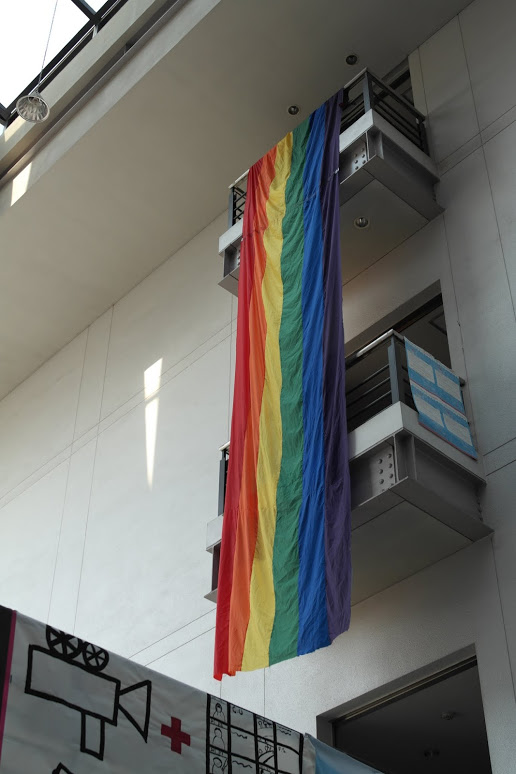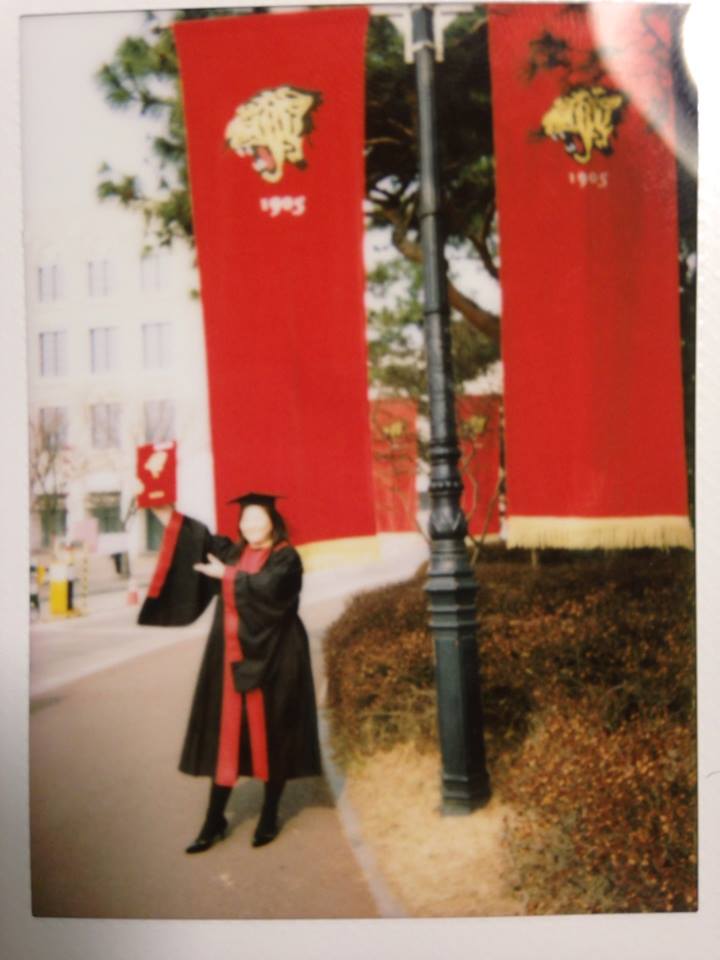
Latest Posts

Law School Reforms: Oh-oh, Here Comes Trouble!

Screen Shot 2014-02-27 at 10.59.31 PM

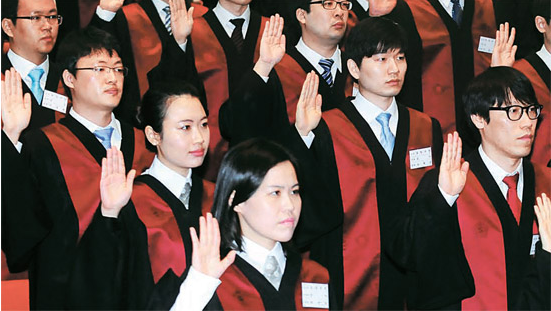
Public prosecutors, including the first batch of Law School graduates, are sworn into office, 2012
Image source: Joongang Daily

The year I entered university (2009) was a remarkable year. It was the  first year Law Schools as 3-year postgraduate programs were introduced (same for Medical Science, but this topic really deserves another post). The goal was to “offer law (and medical) studies to a wider array of students, instead of discouraging them at the high-school level”.

As a result, the Gosi System (사법고시, or ‘National Bar Exam’, but I will use the term ‘Gosi’ in order to distinguish it from the National Bar the current Law School graduates have to pass) will end in 2017. Instead, Law School graduates will have to pass the National Bar, a much simpler exam, in order to start practicing. A difference is that one does not need to hold a LLB or LLM in order to pass the Gosi, but one does need an LLM to become a lawyer with the new Law School system.

In reality, prior to this, many high-scoring students would retake their CSAT (national university entry aptitude exam), in order to get into the 0.1% you need to be in to go to law or medical schools. You also had to choose your career at high school, and if you failed, there was no other way in. You’d think people stopped cramming as much, but no. Instead of law of med schools, majors who included similar curricula replaced the competition – Bioscience and Bioengineering, or Political Science, Public Administration and Economics, for instance.


The issue is also that there are many more Law School graduates than Gosi passers. The idea of the government was to increase the number of lawyers for people to have better access to the law. Which was a brilliant idea in my opinion, because Korean law-people tend to be elitist and haughty and think they are better than other people.

Problem 1: Not all Law School graduates are placed into internships due to the sudden jump in number. In fact, many students who want to become lawyers are now retaking their Law School entrance exams in order to make it to the top 3 universities (Seoul National, Yonsei, Korea), for fear they will not find work placement.

Problem 2: Gosi graduates look down on Law School graduates for not being ‘as smart as they are’. Although the Law School is a 3-year program, and most successful Gosi passers study for 3-4 years to pass the exam, many of the latter consider the LS system to be lax in comparison.

Problem 3: Law Schools are expensive. Most graduate programs in the Humanities/Social Sciences cost 6 to 7 million KRW per semester (7,000 USD), and Law Schools cost 10 million per semester (10,000 USD). Considering Korea does not have any interest-free student loans available, the burden on the students and their parents is immense. (Note: Undergraduate programs cost between 3,000 and 5,000 USD per semester in the Humanities)

Problem 4: Lawyers who are already in practice are complaining that their fees will plummet if so many law school graduates enter the market. (I don’t really see this as a valid ‘Problem’ per se, since lawyers make a bit too much money in my opinion, to the point most people cannot afford legal counselling)


I once made a joke about Korean parents asking their children about what job they’d like to have in the future: “Lawyer or doctor? Lawyer or doctor?“. Although this isn’t too true now, law and medicine are definitely still the two most ‘honourable’ and coveted professions in Korean society. They bring fame, money, and good marriage propositions (I’m serious. My uncle was already in his thirties when he finished med school, but kept receiving proposals well into his late forties, even after he married).

Some of my friends went to law schools. All of them are from rich families, with good academic records, and most of them are passionate about helping other people. Some are in law just because of the social status it entails but this does not mean they take their jobs less seriously.

I also know several students who studied law at university and did not pass the Gosi exam. They read millions of pages for several years, but at their third or fourth attempt, gave up, because they knew it would not work out. And they’ve moved on to other jobs, often but not always law-related. Whether they wanted to become lawyers in the first place, I don’t know – many believe it’s what they want because it’s what their parents want.

It’s difficult to balance the opinion between the lawyers who want to keep their privileges, and the government and people who want better service. It’s tough to enter the profession, so they want their privileges. But all in all, I think Koreans need better access to legal advice. Cheaper, friendlier, available legal services. Not just for corporates, but also for ordinary people.

How Koreans Who Are Merely Acquaintaces Quarrel

[Image description: A square is split into two parts, a blue part and a red part. Both have a black circle at the centre. In the blue square, a line of white footsteps walks right through the centre of the black circle, on to the other side of the square. In the red square, a line of white footsteps is seen carefully treading around the circle while making its way to the other side.  Image source: Laurent Haug]

In a nutshell: by text-message, in politely arranged words, and over weeks, without every calling each other rude names and making sure they do not offend the other person. I recently had a ‘quarrel’ with a Korean acquaintance whom I worked with two years ago. We keep in touch a couple of times a year by text, but have never met since. Let’s call this friend A.

A asked me to translate a couple of documents for him. I said yes, and obviously I thought I was going to be paid, since he knows I work as a translator. It didn’t even cross my mind I needed to state it (which was unprofessional of me, I realize now. Won’t make this mistake again). When I finished the job, I sent him my bank info, with my usual quota listing. He sounded startled, and said “Oh, I didn’t know this was a paid job. I’m really broke these days and in debt. I’ll pay you next time”. I texted back “Oh okay, I’m having a tough time paying my student loans too.”

A few days passed by, and it really bothered me that he had not even considered paying me – taking my work for granted – I found  that very rude. So I carefully wrote, “I’m sorry I did not tell you outright it was a paid job. But since I had told you some time ago that I’m working as a translator now, I thought you knew it would have to be paid. I did work for you, and I think it is wrong of you to think of my work as free”.

He replied “I thought friends help each other out. And since you’re talking about owing money, I bought you several lunches when we worked together because I thought we were friends”. I don’t like to fight with others. It’s just not a nice thing to do, and if it isn’t anything serious I’ll just let it slide. But if it’s work-related, it’s different.

So, I said “I’m sorry I forgot about you buying me so many lunches. I really don’t remember about that because I was really busy when we were working on that project together” “But if it was that much money, why did you not ask me to pay half? Why did you insist on buying the lunches? You know I’m okay with going Dutch.”

“Because we are friends. And friends don’t act petty like that”, A typed back quickly. That’s when I realized we had completely different sets of values, and different ways of thinking. It wasn’t about me or him doing something wrong, it was just that we viewed things differently.

I think, on principle, that people should go Dutch when they eat together. Because you ate, and I ate too. So we pay half. If for some reason I don’t have enough money, maybe I can borrow from you, but it’s my duty to pay you back.

But I’ve also been living in Korea. So sometimes I let people buy me food, and sometimes I buy them, usually one for one. (Or I buy lunch, and you buy coffee. Which works out because coffee costs as much as a meal here, or more) And if I buy someone a meal, I usually forget about it, because I don’t like to keep counting all those small things. What you give, you give. It’s done.

Then I remembered this story from a Korean friend of mine from high school. She’s working as a graphic designer these days, and when she was in university people she knew from lectures or student clubs would ask her to ‘help’ them with designs – posters, pamphlets, and such things. Everybody expected it to be free. Even she did.

I went to see her one day, and she said “I’m really sorry, I can’t stay for coffee, because this poster design needs to some minor alterations! Last-minute change, really”. I said: “But you aren’t even getting paid for this job. Why are you letting them boss you around like this, telling you to change the design one hour before the printing?”. She replied: “But they’re poor students, and I sort of know them from this course I’m taking”. “But they’re not your friends, it’s none of your problem! You should have asked them to pay you, you did a good, professional-looking job! You’re a poor student too, you know!”.

Then she said: “Wow, sometimes I remember, you really used to live abroad. That’s not the Korean way of doing things” (we’ve known each other for years).

When I talked about this argument I had with A, most of my friends having lived abroad, said “Wow, he expected you to do it for free? I mean, you should have told him to pay up front, but how did he not expect to pay at all for professional work?”.

Anyway, I kind of let this slide (because honestly I could not for the life of me remember how many lunches he had really bought me), and I agreed with A that we just had personal differences, and we agreed to stay friends. I’m relieved he didn’t get all angry and start yelling at me over the phone though, because he’s 5 years older than me, and in Korea that would give him the right for him to yell at me, regardless of the circumstances. Or that’s what I’ve been told when I asked for counsel on this small but not really small disagreement.

Seoul And Its “Tourists”

b70-14660

“Madame Butterfly” (Image source: Movieposter.com)
I have very little respect for Puccini, simply because of this opera.


My friend once met a marijuana-selling Frenchman in Seoul who said:

I want to stay here forever. In France I would never, ever get laid, but here, girls are hitting on me just because I am French.

Being a foreigner means many things in Korea. You’re “different”. This “being foreign” status entitles you to many advantages as well as prejudices. For instance, it you are a Caucasian-looking woman, men will assume you are readily available for sex. But on the other hand, if you are a Caucasian-looking man, your mother-in-law-to-be won’t grill you with “What do your parents do? “Where is your hometown?” “Do you own an apartment in your name?” “How much do you make?”, like she would a Korean son-in-law-to-be.

Korea attracts a very wide array of migrants. There are the English teachers. The businesspeople. The Korean Studies students. Or, those passing by, on exchange student programs, on a Korean government (NIIED) scholarship, on an internship for a foreign embassy.


THE DIFFERENT TYPES OF FOREIGNERS YOU WILL MEET IN KOREA

I have met many foreigners in Seoul, most of them students (both exchange and regular) at universities. Some I found wonderful and eager to learn about Korea, others just enjoying student life, and some disrespectful and downright barbaric. I like to call this last group “The Tourists”, since their lives here are superficial (In fact, actual tourists might have a better understanding of Korea, and I hope I’m not offending them by using this term). Here are how some people from each of those groups behave:

  • The “Into Korea” Group: Take Korean lessons, love some aspect of Korean culture, want to come back in future, have some knowledge of Korean history, and read many books and newspapers about what’s happening here. The girl who came here on exchange and then transferred to Korea University is an example, as well as the guy who came here on an exchange, went back, then started working at the Danish embassy here in Seoul. Additionally, the truly hardcore group will criticise and look down on K-Pop, while the tourists will love it (because it’s the only internationally marketed type of Korean music, apparently).
  • The “Enjoying Life” Group: Take some or no Korean lessons, but like Korea and its cheap food and alcohol, as well as the vibrant nightlife. They enjoy travelling to Jeju Island as well as nearby Asian countries. They will probably not come back, while keeping fond memories of this faraway country. Korea seems to be a springboard for this group of people.
  • The Tourists usually do not show any eagerness to learn the language (and hence do not learn anything about the culture except for the photos they take at tourist destinations), and have little or no respect for Korean culture and people. They’re here to shop, or…actually I’m not really sure what they’re here for. Hong Kong is probably a better shopping destination, in my opinion. And, since, most expats in Korea are North American, so are they. On the other hand, there was this Dutch guy who only ate fried chicken and McDonalds because he couldn’t learn how to use chopsticks over the 4 months he spent here. If they are exchange students, they might have come here because they didn’t get into their top pick in Japan or China, and will love to tell you about how well they well they speak Mandarin or how many volumes of manga they’ve perused.


THE TOURISTS

A surprising majority of English teachers here are tourists, even if they are here for years, even decades. The excuses I have heard are:

  • “Korean is useless. Nobody speaks it [outside Korea]” (rude)
  • “I don’t have the time, between my job teaching and all” (lazy)
  • “It’s so difficult” (lazy)
  • “Korea is too backward. People are so conservative” (hmm, and everyone from your country is liberal?)
  • “Korea is too weird. People don’t accept me because they think I’m weird” (are you sure you are not confusing weird with rude?)
  • “I’m black / latina / gay / lesbian / fat / skinny / hairy. People don’t like me here” (oh dear, there might be a valid point here, but there’s also a possibility that they self-victimize and keep feeding into their narrative)
  • “Koreans don’t get jokes, they’re no fun” (because we should have exactly the same jokes everywhere in the world)

And with these excuses, they only spend time with other expats, or Korean-Americans, or Westernised Koreans, which leads them even further and further astray from getting to know  anything about Korea at all (By the way, I know black, latina, fat, skinny, hairy, tall, gay, and lesbian foreigners who have settled down in Korea quite well. What do they have in common? Oh, they speak some Korean, and actually talk to other Koreans).

Korea is different from Western countries. Yes, we have social problems, I can start listing them already. But you adapting to Korea is mostly a matter of personal effort. Have you read books on Korean history? Have you talked with Koreans? Have you actually, really, tried to learn the language? After all these efforts, have people treated you in a discriminative way based on some aspect of your personal life?

Just flip the story and think: a Korean who lives in the US while working a job doesn’t learn the language at all and fails to integrate into society. They’d probably call the person problematic: Didn’t she have any friends? Didn’t he have a life there, I mean, what did they do for five years?


WHY DO THE TOURISTS BECOME TOURISTS?

At the root of this phenomenon, are one or a combination of the following problems:

  1. A feeling of cultural superiority
  2. Resulting sense of entitlement
  3. Some deep personal issue they are projecting onto Korean society. (This last reason is obviously completely irrelevant to Korea per se)

A major problem is the sense of entitlement.  The “I’m from (insert country name), so why isn’t everyone interested in me?”. I find this attitude most common among Americans somehow, but this could simply be due to the large American population here. I fail to understand where such an attitude comes from – If you are a foreigner, doesn’t that mean you need to make more effort to break into established social groups, or “cliques”? Could it be a lingering sense of colonialism from the Americans “helping” Korea during the War? (Yes, I said it, colonialism).

This entitlement issue stems from cultural superiority. Korea isn’t fair. Korea discriminates foreigners but we don’t, therefore we are superior and, why isn’t Korea like us? (Which is wrong in itself, because clearly you have not looked at the issue from the POV of an immigrant in America) Yes, why isn’t Korea exactly like your country? Because Korea isn’t America or Australia or Austria! Why this is so difficult to grasp, I don’t know. You are far, far away from home. You are in a different culture. There are supposed to be differences, and if you want to live your life exactly the same way as in Europe/US/Wherever you are from, why did you hop on a plane and move all the way here?

Another issue is the projection problem. Whatever personal issue they had, they somehow connect it to Korea, and turn it into a “Korean” problem.

I’m fat, so I won’t fit in Korea. Everyone hates fat people here” is an example. You being fat will only be an issue if you keep obsessing about it and worried it will get in your way from making friends. That’s you holding your world back from reaching out, and you would have the same problem if you were anywhere else. I’ve seen people with varying physiques in Seoul, and in general, Koreans are much more lenient towards foreigners with less or more weight.

The “I’m black” issue is a little different, since Koreans are not used to seeing Black people (I say black because not every black person is African-American. In fact I have met more Africans than African-Americans here), and do hold unreasoned prejudices against them. The racism against black people is an issue that requires deeper analysis, since it’s what I call hand-me-down racism. We do not have any historic ties with Black populations – the racism we hold is what the American occupation instilled in us, when they brought Black soldiers and treated them as second-class citizens, in a country which they treated as third-class citizenry. (That’s a whole new kind of mindfuck).

Often, black men are taller and bigger than Koreans or Caucasians, and thus physically intimidating to the petite Korean males (and females). Koreans are also scared of Kor-Am men who are bulky and all muscled up, by the way. Not to mention, American GIs are famous for getting drunk and being rude to people in the subway, and since among them there are few African Americans, they stand out more (Also, an American calling himself “Quincy Black” was taken into custody earlier this year for soliciting sex from underage teenagers and taping them without consent) [The race issue will be dealt with in another post, since it is a complex one].

But getting back to my point, I know several Kenyans and Nigerians who have settled in Korea, given they learned the Korean language, worked hard at academics/their jobs, and tried to understand Korea. I am aware they’ve faced unfounded discrimination at first (particularly from strangers), but once their peers got to know them on a more personal level, they accepted Koreans were just misinformed.


TO AVOID BECOMING A TOURIST

Learning Korean is a must if you want to settle in Korea. Why? Hello, it’s the national language. You are not in the US or the UK. The newspapers run in Korean, the government runs in Korean, and, well, aren’t you going to the supermarket sometime to buy yourself groceries? Have you ever heard a French person complain in the UK, saying “Oh mon dieu, why they cannot speak French in this country!”. If you did, you’d have thought her or him strange, even rude.

Read a Korean newspaper, preferably in Korean. Reading about Korea from foreign sources is a good start, but there probably will be less coverage. Joongang Ilbo runs the Joongang Daily, Hanguk Ilbo runs the Korea Times, and there’s also The Korea Herald. However, all three are not always written in quality English, and sound like Anglicised Korean (Konglish). I would recommend the Korean versions of Donga or Joongang Ilbo as a main source, since Chosun still uses Hanja characters in the headlines and articles. The reason I am not recommending more ‘progressive’ journals, Hankyoreh and Gyunghyang, is because the top-tier journalists go to Chosun, Donga and Joongang, and have better sources. It would be balancing to read a ‘progressive’ weekly magazine as a supplement, though.

Make Korean friends to learn about Korea. Not the gyopos, nor the English-speaking Koreans (like me). Koreans who speak English extremely fluently are likely to not be too “Korean” themselves, and probably want to leave Korea because their values are too similar to European or American ones. They may or may not be interested in Korean politics. Meanwhile, a Korean who speaks mostly Korean will probably be more interested in and knowledgeable about Korean traditions and current state of affairs. They will have a more “Korean” POV and outlook in life.


P.S. Synopsis of “Madame Butterfly”:

16-year old Japanese girl marries older American soldier. American soldier has sex with her, then returns to America right after wedding day, and marries an American woman. Meanwhile, Japanese girl has given birth to a son from said soldier, and hopefully waits for his return. People tell her he will not return, she does not listen and waits (apparently this is what Puccini found so ‘beautiful’, the waiting). American man returns together with American wife, demands Japanese girl hand over her son so they can raise him. She says yes, smiles, goes to the back room, and slits her throat. Dies. This opera should be banned.

A petty moral dilemma: SSAT, HKAT, and LG Fit walk into a bar…

“Samsung Aptitude Test Center for New Recruits”
Image source: Etoday News

Yes, you read that right. A Moral Dilemma. And no, I’m not talking about political choice or anything fancy like that.

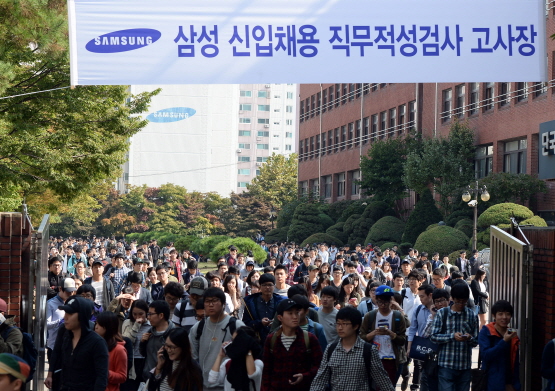
Last year, approximately 100,000 graduates applied to take the SSAT, Samsung Aptitude Test. What? There’s a standardized exam to work for a private company? Just for a managerial job? And they rent entire school buildings for it? And people pay up to 200,000 KRW (approx. 200$ for online crash courses? And universities bring in private tutors and provide weeks or months-long courses to prep graduates? Well, actually, this may not have the shock value I was hoping for, since you already know I’m writing about South Korea. But anyway.

Despite the booming economy in East Asia (as compared to the US and Western Europe anyway), it’s becoming tougher and tougher to find a job in South Korea, especially if you’re leaving university with only a Bachelor’s degree. What? Isn’t that what BA graduates do, go work in companies, just precisely because they didn’t want to pursue an MA? Apparently not.

As Korean conglomerates have moved towards favoring engineering majors, even for administrative positions, even Business majors need to spice up their résumé.

Which brings me back to my story.

Last Saturday, a girl from my major, a year younger than me, called me out of the blue. I was surprised, because I knew she was busy cramming for SSAT (Samsung), HKAT (Hyundai-Kia Automobile), LG Fit, and whatnot. Let’s call her “Cram”.

Cram: Hey, how are you? Can I ask you for a favor?
Me: Of course, what is it? How’s the résumé-writing going?
Cram: Well, I got past the screening, and I’m taking the online aptitude test Sunday.
Me: Is that P&G?
Cram: No, no, it’s another one. Crème (another friend) is taking the P&G aptitude though.
Me: Oh cool, so, what do you need me for?
Cram: I think I might need some help preparing for the aptitude test. It’s my first one, and it’s mainly logic questions. In English.
Me: Like LSAT, PSAT, and stuff?
Cram: Yeah, I know you’re great at those.
Me: Oh, sure. I’ve actually never taken one of those exams…
Cram: But you’re great at English and linguistics.
Me: So, do you want to go over some sample questions? You can probably find some.
Cram: Could you come help me on Sunday?
Me: What do you mean?
Cram: Can you translate some of the questions that I don’t understand?
Me: I can’t help you solve the questions, and I can’t guarantee I will be helpful (this was supposed to be a polite ‘no’)
Cram: No, no, you just need to be there, and help me.
Me: Oh, okay. You know, I can call up some friends and ask them how they took their exams.
Cram: Yeah, that would be great too. Thanks a lot.

Only when I hung up the phone did it hit me that this girl had just asked me to help her cheat on an exam! A career exam! By now you know I’m a little slow at analyzing situations I’m not familiar with, and also bad at declining when asked for help. By deduction, you also now know I’ve never cheated on an exam (I just flunked them instead).

The next day, after I went on a ride-out with my friend Lisa, I popped the question. (Lisa is Korean but born in the US, I’m not entirely sure but she might have US citizenship)

Me: Lisa, somebody I sort of know, but isn’t really a good friend of mine, asked me to help her cheat on an exam, and I said yes.
Lisa: What? What do you mean, you said yes?
Me: I don’t want to sound like the ethics police, but isn’t that wrong?
Lisa: Of course that’s wrong. What exam is it?
Me: It’s an internship exam. One of those aptitude test thingies.
Lisa: What? She asked you to go in her place? Are you crazy?
Me: No, she can take it online, and just needs to submit it on time.
Lisa: Why didn’t you say no?
Me: I didn’t really know she was asking me to help her cheat! She didn’t say “I need your help cheating on this exam”. I didn’t know what to do, I’ve never cheated on an exam. I mean, this girl has a 4.5 GPA! It’s not something I expected from her.
Lisa: I’ve never cheated on anything either. I think that’s bad.
Me: I guess that’s how badly she wants this opportunity, even asking to help her cheat.
Lisa: Are you sure her GPA isn’t…
Me: Maybe she cheated out of her uni exams too then, huh?

When I posted this anonymously on my university’s community, most people’s reaction was: What’s the big deal? Why not just help her? Other people are doing the same thing anyways. Although a few others shared my opinion towards cheating on such an important test.

However, my close friends all seemed repulsed at the idea of someone so casually asking to help herself cheat, and most reacted this way:
– Wow, she must have cheated through all her uni exams too then. Eww.
– But I’m afraid she’s going to get someone to cheat for her anyway.
– Even if she gets the job, they’ll know. Incompetencies show.

I don’t think I trust Cram as much as I used to (we were never close friends but were friendly). But I also don’t think I want to be patronising and give her a lecture on ethics. That’s just not my damn business. / end petty moral dilemma.

Korean Dictionary Reverts to Homophobic State

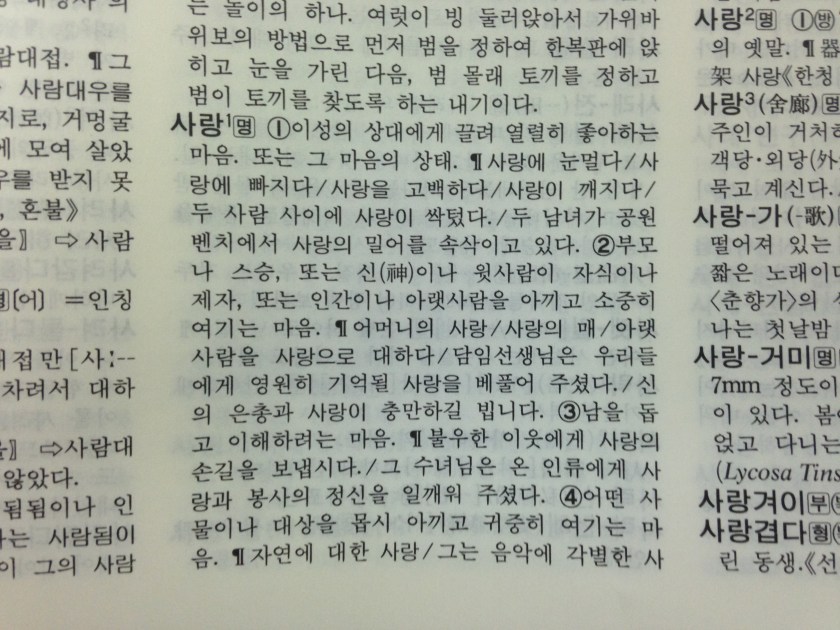
The 1999 Edition of Standard Korean Unabridged Dictionary, published by NIKL
Photo by me

In November 2012, the Standard Korean Unabridged Dictionary, published by the National Institute of Korean Language (NIKL), re-defined five words:

  • 사랑 (love)
  • 애정 (love, affection)
  • 연애 (dating, courtship)
  • 연인 (‘partner’, without referring to specific gender)
  • 애인 (‘lover’, without referring to specific gender)

All five words were changed to gender-neutral definitions. For instance, ‘love’ was re-defined from a feeling of attraction towards a member of the opposite sex to a feeling of attraction between two people. Likewise, lover was redefined as two people who are attracted to each other, as opposed to a female and male person who are attracted to each other. Many members of the LGBT community rejoiced at this small change, which would allow them to talk about themselves and their feelings free from heterosexuality-based words.

However, barely a year later, in January 2014, Christian advocacy groups (technically, Protestant) lobbied into reverting these newly defined words to their original state. Such religious advocacy groups have been backing anti-LGBT movements in many different forms – When dramas with LGBT characters are televised, they place ads on the first page of every major daily which read ‘These Heretic Dramas Will Turn Our Children Gay’ or ‘Our Country Is Headed For Hell’ (through which I’ve realised just how much money advertising makes). When members of the National Assembly try to pass yet another draft of the Anti-Discrimination Law, they campaign to exclude the clause ‘equal rights regardless of gender, ethnicity, age, origin, sexuality, and sexual preference’, specifically to strike off sexuality and sexual preference. The truth is, there are so many Christians in Korea that their power cannot be ignored. Not to mention the fact that most leaders in politics and business are Christian, or pretend to be, in order to gain voter confidence or B2B customers.

On Yonhap’s article covering this change published March 31st, many comments were made, by both LGBT and non-LGBT people:

아니 동성애을 떠나서 애완동물 사랑 자식사랑 부모사랑 국가에 대한 사랑 이런건 이제 무시하는건가 by spel****
What? Regardless of homosexuality, what about love for my pets, love for my children, love for my parents, or love for my country? Are they ignoring these?

난 나의 어머니뿐만 아니라 아버지도 사랑한다  by dohy****
I don’t only love my mother, but also my father

사랑은 정의할 수 없는게 사랑인데… by byun****
Love is love because it can’t be defined…

남녀간의 사랑보다 더 중요한 의미는 부모자식간의 사랑 같은데.. by sina****
I think the more important meaning is the love between parents and their children, not between men and women…

An official at the NIKL stated via Yonhap that these changes were enacted in order to take into account the ‘conventional sense’ of these words, following up on “complaints that have been placed from various sources”.

Why do Koreans graduate so late from uni?

Screen Shot 2014-02-27 at 12.53.14 AMImage source: Ipsi Myungmoon Jungle-go

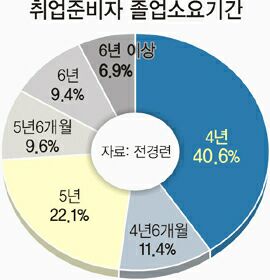
Im my class of 70 students, only three graduated on time, that is, within the span of 4 years (or 8 semesters). One graduated a semester early by cramming his credits. About half of them graduated after 9 or 10 semesters.

Even weighing in the fact that Korean men serve in the military for 2 years, Koreans, both male and female seem to take at least two semesters off prior to graduation. This year, entrants from year 2010 (for women) and from 2008 (for men) should be graduating – but only 10 students from 2010 did, all of them women. At the graduation, there were 10 students who started university between 2004 and 2007. So, where are all those students? What are they doing, burrowed in somewhere, playing Starcraft and League of Legends?

You will find them at the library, at the reading rooms, at the hagwons – all cramming for some exam or another. What for? The GRE? Are they all going to grad school? No. They’re preparing to pass several exams in order to find a job at a good company. Seriously? Exams to get into companies? Yes indeed-y.

segye

Data source: Korean Federation of Industries via Segye Daily

What kind of exams?
(1) TOEIC / TOEFL / OPIC: Some form of English language proficiency exam. Scores are mandatory to apply. You must also pass rounds of English-language interviews for most positions, so “English conversation” courses are immensely popular too.
(2) A Second foreign language – Many companies give you extra points for having attained certain levels of 2FL: Delf B2, HSK 6, DELE B2 or higher, for instance.
(3) Computer literacy – Microsoft Excel, PPT are a must. Photoshop is a plus.
(4) Each company’s “aptitude test”: consisting of various logic, arithmetic, geometry, spatial cognisance.
(5) Depending on the company, various types of national “certificates” or “licenses”: Trade Theory, Accounting (AICPA/CPA), Taxation, so on.

Take my friend Emma for example. She wants to work for a trading company – Daewoo International, LG Corp, Samsung C&T. She wants a high score on her TOEIC and TOEIC Speaking of course. Over 900 and 170, respectively. Luckily she spent a year abroad in the US as an exchange student. Otherwise she might need to take a year off and study English somewhere. She also wants to apply to work for the Latin American trading teams – so she’s taking Spanish, to pass the DELE B2. Additionally, she want to demonstrate her interest in trade, so she’s joined her university’s Marketing Club, and she will be taking the International Trade Specialist certificate exam – for which she will study Trade Law, Financing, Contracts and Trade English. Despite all this, she’s still regretting the fact that she hasn’t undertaken an internship – she didn’t qualify because her major is in English literature. Had it been Business administration or Spanish literature, they would have taken her resume more seriously. Oh, and did I mention she’s retaking three courses, because she wants to bring her GPA to over 4.0? It’s because her major is not a “serious” major, that’s why she needs good grades, at least.

But why do you need so many qualifications to work at a company? Well, Korea is a densely populated country with a highly educated population (80% of the population pursuing higher education) who are drilled into pursuing success as defined by society. Everybody wants to work at a “top company”, and well, how many “best”s can there be? Although everyone aspires for the “quiet, lesisurely” life, many believe that in order to achieve the former they must sacrifice their youth to an extent. “To burn your youth for a good life afterwards” seems to be an accepted proverb.

Several social, structural reasons can be rooted to this issue. But the biggest reason, in my opinion, is the lack of a strong social welfare system. Korea has a compulsory National Pension System (for anyone between 18 and 60 years of age) – but you must have put in money just as you would for a private insurance scheme in order to receive it in your retirement (usually at 60, but it’s possible to start receiving at 55 under special circumstances). The longer you have been paying, the more you will receive in future.
For example, if your monthly income is 1,000,000 KRW, you will have to pay 90,000 KRW monthly to the NPS. After 10 years of payment, you will be eligible to receive 166,060 KRW; after 30 years, 462,410 KRW; after 40 years, 609,210 KRW. To be able to receive about a million won in pension, you will have to have put in 300,000 every month for forty years! (Which is why Koreans trust the private insurance market)

President Park Geun-hye (yes, the dictator’s daughter, yes, really), incumbent president since 2013, introduced the “Basic Pension” scheme as a supplement to the national pension scheme, to which all senior citizens are eligible, regardless or their participation in the National Pension System. However, the maximum monthly amount receivable remains at a meager 96,800 KRW (approx. 90 USD, or 65 EUR) per person, and at 154,900 KRW (approx. 144 USD, or 105 EUR) for married couples over 65 years of age, respectively.
Considering the fact that the 2013 “minimum cost of living” (which makes you eligible for government aid) is set at 572,168 KRW (approx. 535 USD, or 392 EUR) for a single-person household, and at 974,231 (approx. 911 USD, or 667 EUR) for a two-person household, this amount is just pocket money – it won’t even cover the rent on government housing.

Because of this weak national pension, most Koreans believe it is “up to them to fend for themselves and ensure a good retirement”. The NPS’s strength, is, of course, that everybody works hard, instead of laying back and collecting pension (“moral hazard”), without a worry about what to do when they fall gravely ill. But on the down side, it deprives people of a sense of security, always.

The Park government is aware of this, and as a president whose policies have largely focused on welfare, is making progress. In 2014, the “4 Major Illnesses Aid Program” was beta-launched. When it is finalised, the Program will reduce medical fees for cancer, cardiovascular, cerebrovascular, and rare diseases. As a contrast with the previous Lee government, who cut heavily on public spending but focused on macroeconomic growth, Park’s regime seems to be “modernising”. The transition team from Lee to Park included Professor Ahn Sang-hoon, who studied social welfare at Stockholm and Uppsala, something I found remarkable as a contrast to the US and UK-educated members that make up the usual bunch.

LGBT Poster vandalized on university campus…yet again!

Korean LGBT folk have it pretty bad. In fact, they’re not too surprised to be targeted, teased, or discriminated. It’s just the way things have been, and continue to be.

A gay friend told me that back in the early 2000s when he was in university, LGBT societies would get student Christian groups gather in front of their club room, sprinkle holy water on their door, and sing gospel songs “in order to save those poor souls being led astray by Satan”. This doesn’t happen anymore, maybe due to the fact that since then, LGBT societies would be given “anonymous” club rooms on campuses, disguising their namecards on the door or by merging many of their activities with the women’s rights groups.

But university LGBT societies have constantly been unable to even welcome newly admitted students, like many other societies and clubs do – mostly because some crazy individuals acting in the name of the Christian religion keep vandalising their posters and placards. Although this is not the first time such an event has occurred, this year’s vandalisation at Korea University was covered rather extensively by the media, including KBSYonhap, and Herald Daily.

변날5

An unvandalized welcome flag at Ewha – but for how long?
Image source: You and I, a webzine published by the LGBT Human Rights Association

Ewha Women’s University’s society, “Byun-nal” has in particular had a noteworthy experience when, around 2010, their campus posters were torn to pieces. Fortunately, the process was caught on security cameras, and the attackers were found to be members of a Christian society, also part of a university group. When faced with charges to compensate for the posters, the Christian club refused to even reply to the demands, and after several attempts, stated that “the member in question has since withdrawn themselves from the club”.

It can be difficult to report and receive help from university authorities, who allow LGBT societies to exist as official university organizations, but do not want to engage too much. Furthermore, in order to keep their anonymity, many students are reluctant to face the university authorities and file a complaint in person, which is much more effective.

Many prominent businesspeople and government officials, as well as celebrities, are hesitant to reveal their sexuality, and will simply keep living “single” lives (much like the “bachelor uncles” described in the Family Secrets: Shame and Privacy in Modern Britain by Deborah Cohen).
In 2008, the first-ever lesbian candidate to present herself at the general elections, Choi Hyun-sook, published a book on her attempt at a political career – it is worth noting that Choi was previously married to a man, and had two children with him. And if any of you have been to Pulse in Itaewon, Korea’s most prominent gay club, you will see male celebrities hanging out there every weekend, yet never revealing their sexuality to their fans.

As the Korea Queer Festival celebrates its fourteenth year in 2014, the Anti-Discrimination Law encompassing sexual identity and preference, race, gender, ethnicity, physical appearance, marital status, is still drifting in the doldrums at the National Assembly.

lgbt

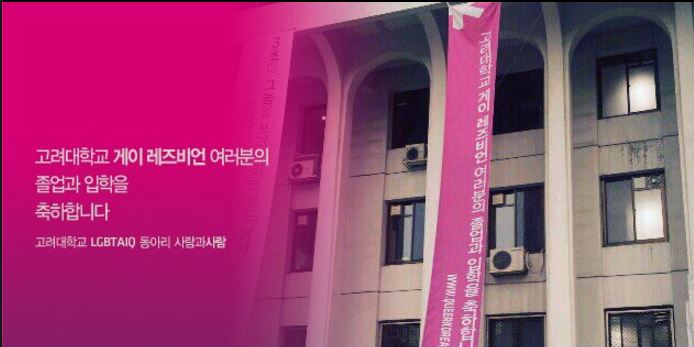
“Congratulations on your admission / graduation, LGBTs!”,
(original design of the vandalised poster at Korea University)
Image source: 사람과사람 

My Swedish friends discuss the English word “bitch”


“hen”: Swedish gender-neutral third person pronoun

My friends Mow, Gee, Lanka, Eva and Bohr and I were having a little gathering at my place. The Swedes would call it a förfest (pre-party).

Now, Gee is a Turkish graduate student from Lund, in Korea for one term to study the Saemaeul movement, as well as make some money working for Samsung (duh!). As we were in the company of Swedes, he teased them about the sing-along drinking games the merry tall folk play. Then it began. Swedish social drinkers Mow, Eva, and Bohr suggested we play this game, in which we would call the “it” person “bitch”. The trio began to hesitate in Swedish. The talk was hushed, but intense, and serious.

Lanka, Gee, and I asked. What’s going on? Is the game too complicated to explain? No. It was that we had to call the person “bitch”.

What did they mean? The word “bitch” apparently has a more gender-neutral equivalent in Swedish, while keeping the sassy tone. “What about man-bitch then?” “No, because that puts the man before the woman, that’s not fair” “Then bitch-man?” “Manwhore?!”

We never did draw a conclusion, of course. Skål to the Sveriges Kvinnolobby!

My Non-Valedictorian Speech That Was Never Caught on Camera

gradMe looking all grown-up and holding my $40,000 degree (no taxes!)
Photo source: Un-graduating friend working as my assistant du jour

Hello Citizens of the Internet!

I graduated today, and since I was not one of those fancy valedictorian-summa cum laude people, I decided to write a little dedication to the wonderful people I met during my five years at university. There’s a little part dedicated to the horrible people too, but feel free to skip over that. Good vibes only amirite?

TO THE HUMAN BEINGS:

Dear Professors who wrote me recommendation letters for graduate school: Thank you. Because I wasn’t an excellent student and you had no reason to write them. From one of you, I took two development courses in which I got As, which was great. But from another of you, I’d only gotten Bs in history, and I kind of know that you didn’t really know who I was until I turned up at your office asking for a recommendation. But I know you were too gracious to say “Oh, you’re that B student who now wants letters?” like some of the other professors did. And the third professor, I know I only took one of your courses sophomore year, and yet you agreed to write me FOUR letters. My god. Thank you. That’s amazing. I don’t even know what to say. And to all three professors, thank you for shaking my hand during Commencement and congratulating my admission to the programs I wanted. It felt earnest, not like one of those Hallmark thank-yous.

Dear Professors who promised to write me letters but then mysteriously disappeared: I know you have no real obligation to help me, but you could have just said no, instead of disappearing mysteriously and never replying to my e-mails once applications began. That would have been professional (because we know you get a separate paycheck for providing academic advice).

Dear Partner from Firm I Interned At: I think it was technically your authority to hire me, even though it was probably the Associate who did the scouting. Anyway, thank you for giving me the opportunity to work in a fantastic firm, being nice to the interns, and for letting me use your iPad to watch Spartacus. I hear you’re a Chairman at a Korean chaebol now, and honestly I’m not surprised. By the way, your teammates were all talking shit about you behind your back, but that’s not your fault. That’s what partners have to deal with, right? I’d also like to thank the Senior Associate who gave me challenging jobs, like calling US experts for interviews at 6 in the morning by myself.

Dear People Who’ve Given Me (pro bono) Jobs Over the Years: Thank you for trusting me and paying me. And getting me started on my career. I can promise you I did my best and will continue to.

Dear Wonderful & Weird Friends Who Put Up With My Awkwardness: You guys are all too cool for me, and yet you hang out with me.

Dear People Who Crash at My House and Clean Up Afterwards: It’s couchcrashers like you who get invited again. You also bring food and tea and water to keep me stocked.

Dear Gay Brothers and Sisters: I know one of those crazy Christians took the “Happy Graduation, KU LGBTs!” posters and tore it to shreds. Those lunatics. But I know we’re all stronger than their crap, so I don’t worry about that anymore. We’re here, we’re queer, bring us the light beer!

Dear Friends From College I Can’t Remember How We Met But We Still Hang Out: I find it extremely humbling and cool that you’re greatly intelligent people yet never show it. You’re med students and lawyers and businesspeople and overall, people who stand up for the things that matter in life, are busy as hell, and yet you still make time to meet me and talk about your lives.

Dear Friends in my major I don’t really know that well: Hi everyone. I know I haven’t been socialising much, and I never really remember your names that well, especially you Kate and Kathy and Cate and Kat. But thanks for saying hi to me at Commencement, and telling me a little about your lives. That was sweet. Also, I’m really surprised and happy two of you are going to Med school, that’s so cool.

Dear Girl from Eng Lit: I’m really sorry, but your blatant plastic surgery plus layers of make-up is like a magnet to insecure people. I couldn’t help but stare all term, and I sincerely apologise. I know it’s wrong to stare at people. I know it’s misogynic as hell. But I was uneducated as fuck back then and I used to think nothing of judging women by their looks.

Dear Welsh Friend Who Taught Me How To Speak With A Scottish Accent: Long live Liz Lochhead, and the many accents of the UK! Also, I think you bought me more cups of tea than I ever bought you. I still don’t quite know if it’s because you think my accent is genuinely interesting and worth studying, or because you’re such a British gentleman incapable of not being nice to people (I know the sort).

Dear British Exchange Student Who Crashed My House Party By Bringing Five More People to a 6-Person Party To My 13m2 Flat: Girl, you’re cool and all. But my apartment is tiny. And I don’t know you that well. I also only invite people I know and like. With the six of us it was already pretty jammed. And them you went and brought five more people, whom I didn’t even know, to my doorstep. I can’t say “no” to people who are on my doorstep! Anyway, you crashed the good conversation we were having, because with 11 people in my flat it was impossible to hear anyone anymore.

Dear Scottish Exchange Student Who Has An Issue With Women: Um, if a girl asks you out and you don’t like her, it’s not the end of the world. You don’t have to block me on Facebook and LinkedIn and run out of the lecture room every time class is over. I’m not going to pin you down and berate you. Wait, maybe you’re gay and I confronted you with your identity. Hey, that’s a good way to look at things. Anyway, you said “Hey, let’s travel in Scotland by car together”, so I asked you out on a date just to see if that was going anywhere. Relax, man. Hope you handle things better now. And if you’re out of the closet now, Thank God, She Saved Yer. (insert rainbow emoticons).

Dear Austrian Banking Student Who Helped Me At Work: Hey, thanks do much for the headhunting lesson you gave me when I was in charge of tracking down executives at my internship. Hope your work is still awesome.

Dear Swedish Girls Who Hung Out With Me Despite Me Being Weird and Awkward: Hooya! I’m really sorry we started hanging out so late in the semester, but I’ve learned, that Swedes like to be approached like deer. Quietly, gently, and in a group. I loved hanging out with you girls and going to that TempleStay. Hope we meet in Sweden soon (I know I’ve been saying that for two years now but now that I actually got a Savings account with money in it it’s truer than ever).

Dear Hot Korean Guy Who Wants to Flog a Dead Horse: I WATCHED TWILIGHT WITH YOU because you said it was your favourite movie. You took me to your band recital. Then you disappeared for six months. Out of the blue, I get a text saying “sorry I was in Japan”. Honestly, what the fuck man.

Dear British Girl Who Was My Roommate for One Month: I’m not sure what happened here because you moved into my flat, then asked to meet ‘for a tea’, and then brought a guy you said you just had sex with last week, with whom you are apparently moving in with now. Note to self: I seem to not get along with people from this island. Investigate. 

To All the Lonely People Who Like to Rant and Obsess, Even If It’s Clear I’m Not Interested: You people need to start a blog. So people don’t start secretly wishing you catch an illness that will temporarily (or even permanently) damage your throat.

To the Mormon, Suit-Wearing, Pamphlet-Distributing People at Anam Crossing: I know you’re exercising your right to religious beliefs and you do a pretty good job at actually learning Korean and approaching people gently (as opposed to the door-kicking “Come to Jesus or Else” types) but, like, can you drop the suit in summer? It’s just not practical, man. Also, why do I never see women mormons evangelising?

TO THE BUILDINGS, OBJECTS, AND INTERNET MISCELLANY:

Dear School Library: I’m sorry our relationship was so on-and-off, and for using you for the wrong books like :”Kobe cooking”, “Yoga for Beginners (with Pictures!)”, and “Sexuality in Chosun Society”. I also ordered books no-one would ever read in the near future, like “Swedish Mentality” (for when I had a crush on a Swedish exchange student and couldn’t figure out his passive-aggressive attitude), “Reading Comics”, and “Histoire de France pour les Nuls” (because I found it so amusing they translated ‘Dummies’ to ‘Nuls’ and wanted to see if it was in fact a real book title). I also use this opportunity to confess I was kind of hoping for library romance, and admit I have checked out the “dating advice” books, which are useless and should be shameful for the trees fell for their making, but whose pages are tattered and covered with various sub-notes and replies to those sub-notes which contain the wisdom of real women.

Dear School Reading Rooms (in particular to the one underground): I hereby confess that I have once mis-plugged my earphones and played “Troublemaker” from YouTube. On the second hand, I packed, left and didn’t come back for the following half year, so we’re sort of even.

Dear Bus #273: Without you my college life would be incomplete. Thanks for hauling me and my drunk friends from Hongdae to Anam at 5:00 in the morning. And I’m sorry that Swedish guy kind of vandalised your window. I let him do it because he had good hair.

Dear Kindle: You are cheap, fast and available anytime.

Dear Naver: Without you we are all a bunch of idiots. Also: Thanks for annihilating the need to ask stupid questions such as “I know that’s right from YOUR side, but isn’t East the right side from MY house?”, “How the hell do I log onto this [micro-site on university homepage that’s somehow a detached page] site?”, and “Is the name of this famous person spelled with a single R or double R?”.

Dear Blogs I Run: Thanks for taking my ranting. Also, it’s pretty cool people read my writing.

ANGRY COMMENTS I’VE ALWAYS WANTED TO MAKE BUT DIDN’T BECAUSE I HAD TO SEE YOU EVERYDAY:

Dear People Who Come Up With Strange Excuses for Group Presentation Meetings:
1. Missing a Sunday meeting due to “I went to church. Are you denying me my freedom of religion?” is not a valid excuse, especially when delivered through your girl/boyfriend who’s also in the team.
2. Making a shitty PPT file and then lashing out on team members because we “changed your authentic slides” is something you really should not do, especially when you flew out to the Philippines over the weekend and we couldn’t reach you because of your slides where you put the entire 2012 US Govt. Budget in raw numbers, not a pie chart. Ain’t nobody in for a Death By PowerPoint.
3. “Oh I’m so sorry, I was meeting friends to prepare for this job interview I have in one month” is not a valid excuse because (a) TODAY WAS NOT YOUR INTERVIEW DAY; (b) NO-ONE MEETS THEIR FRIENDS TO PREPARE FOR A REAL JOB INTERVIEW.
4. Saying “I’m so sorry. I’m sick” and then running into us with your girlfriend on campus is just bad lying. It’s sleazy.
5. Not turning up to meetings but turning up to all the club parties in Seoul and posting your pictures on Facebook? Did you forget our group has a ‘Facebook Group’? Too much vodka in your blood, matey?

Dear Exchange Students Who Seem To Think They Can Get Me To Work For Them Without Paying Me Because We’re “Friends Through Friends”: First of all, I’m not your friend. We just started to get to know each other. Just because your friend is also Swedish and she’s a friend of mine and I help her get around town sometime and talk to her about Korea doesn’t immediately confer you the rights to be my “friend” and to try to use me. You’re not allowed to suddenly come up to me and say “This thing about Korea. Tell me all about it. Because You’re The Korean Here.” You’re not allowed to message me on Facebook and say “Hey, I want Brazilian waxing in Korea. Can you translate this site?”, what the f*ck. You’re also not allowed to tell my Swedish friend that I’m racist because you’re from Palestine and I don’t want to be involved in your smoothing your fanny. No, I’m not helping you because you are f*cking rude.

Dear Korean Students Who Think I’m a Free Translation Service: You’re not allowed to bring 30-page lawsuit documents for our project and say “Hey, you speak English, you should translate this for us”, when reading your own research material is your fucking job, even if it’s in English.

Dear Crazy Christians Who Followed Me To My House: What you did was illegal. You’re not allowed to follow me from campus to my flat while constantly rapping “Do you go to church?” “Do you?” “Do you know Jesus died for you?”, especially when it’s clear I don’t give a f*ck. And you’re also not allowed to turn up at my flat the next day, and after I’ve slammed the door in your face, start screaming “But sister, otherwise you will burn in hell! We can save you!”

Dear Next-door Neighbour The Single Mom: Your daughter sings even though she really can’t at one in the morning. Your dog barks at three in the morning and won’t shut up. You have men turning up at your door at 4 in the morning, drunk and yelling “I just want to come in for a cup of coffee!”. You have two daughters living with you for f*ck’s sake, and just because they’re out of town doesn’t mean you, the mom, should behave like a teenager. Your daughter is gone and you’re free to do what you like in your life but not when your neighbours can hear your guest yell their horny asses off in the morning. If they’re threatening you, you should call the police or ask your neighbours to help you. But not leave them outside to wake up the entire building.

Dear Male Associate from Firm I Interned At: Hey manbitchasshole. How’s life being the most self-centered, mean bastard in the whole world? Remember when we had the new intern? It was her first job and she was slow using Excel because she had no idea how to, and because you didn’t specify the qualifications needed for the position? Remember when you lashed out on her and said “How can you be studying at an Ivy League college and writing your graduation thesis? Did you even attend university at all?”, and she went to the bathroom and came back 30 minutes later, her eyes red from crying? And what did you say then? “Oh, Rachel, are you feeling ill? Maybe you should go home”, with a straight face, and then she did go home, and never picked up the phone again and I had to handle her payment papers? Well, motherf*cker, she took Excel courses in the evenings, after you sent her home at 1AM every day. She was trying for f*ck’s sake. I hope you’re still miserable you didn’t get to Goldmann Sachs and had to settle for less, and that your hot model girlfriend f*cks you over after she spends all your cash buying Chanel bags and a fake tan. And whatever else she likes. Cause she sure ain’t getting anything else from you.

Dear Racist/Sexist/Fascist Friend: I know we used to be theatre/drinking buddies, but man you have some issues. Like the time you said “Man those Turks/Swedes/Americans/Japs/Chinks are inferior”, or said “Mixed kids will never be Korean” (when you clearly know I have half-Japanese brothers), or when you said “Women just aren’t as smart as men”. Or, maybe the time you said “Faggots don’t exist in Korea, it’s an American invention”. I’m glad we will never meet again. I hope you never become a diplomat like you’ve always wanted, because God, then we’d be just as bashed as the Pyongyang Kims on any good day.

Dear ManWhore: You know who you are. We know who you are. You dated my friend for three years, then slept with some slutty freshman girl, and then introduced that girl as ‘a friend’ to her. And then you went and told all those freshmen that you were a straight A student, who’s a genius at computer programming, and then got one of them to date you, while sleeping with some thirty-year old woman. What the f*ck? You had all Fs the first three terms and we all know it. I hope you catch syphilis in the near future (or whatever is worse than that). I can’t wait to run into you so I can stab you with a heel higher than your little ego.

Dear American Expat Students Who Are Dealing Drugs in Seoul: You should both get deported for spending your parents’ money here on first buying drugs and getting drunk, then using that money to import drugs and sell them to the other American exchange students. By the way, these ‘clients’ of yours have been blabbing about you, you should seriously watch your dealings.

Do (South) Koreans Really Want Reunification?

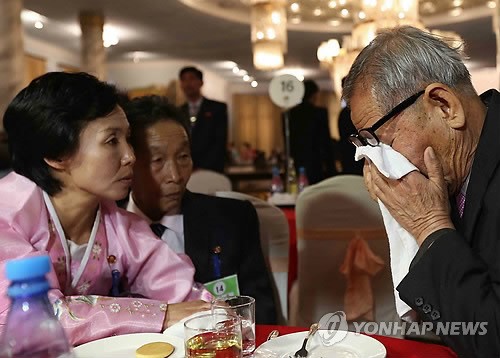
PYH2014022203360001300_P2_59_20140222211707
Photo source: Yonhap News (Feb 22nd, 2014)

Short answer: No.

To be precise, it’s “Don’t really care“, not “Don’t want”. Reunification doesn’t carry the note of passion it used to in my parent’s generation – back then, if you were asked “Do you want tongil?”, and you said no, you were a complete treacherous, unpatriotic, heartless brat. But now, we’re too busy thinking about other things, the memories of having once been a single nation are fading, and most of all, Koreans most definitely do not want to carry the economic burden reunification will entail.

Despite the avid propaganda from the South Korean government – Reunification will allow us to tap into the North’s invaluable mineral resources, we will gain direct access to cheap and disciplined (disciplined, for lack of a better word…) labour force, we are of the same blood and are one people – People’s enthusiasm has grown thin with the crazy outbursts of “We will see Seoul burst in flames if you don’t give us what we want and respect us” tantrum repertoire from the Pyongyang Kims. And not all Koreans are able to draw a line between the North’s regime and its people, who have no choice but to be part of the propaganda game.

This month’s family reunion was covered thoroughly by the media. Over the course of 5 days (20th – 25th), South and North Korean families met long-lost family members and relatives. There were more applications from the South, given that the North’s life expectancy is shorter and the applicants’ age (most are now in their 80s and 90s). In fact, one South applicant met her relatives while on a gurney and on an IV drip, and this meeting is seen as the last opportunity for these relatives to ever meet, given their age as well as the fragile South-North relations of recent years.

The reunion was more strained than previous meetings, with the North stationing officers at each table, and propagating that North leader Kim Jong-Un’s ‘grace allowed this event to happen’. One South journalist’s entry into the venue was delayed, when the North’s computer check-up revealed his laptop contained a North Korea human rights document.
The North has earlier postponed this reunion, and the rescheduled meeting was met with uncertainty, with the South-US military drill overlapping the course of the event. The first planned event was canceled when the South and North were unable to reach an agreement on the venue.

However, it is worth noting that for the younger generation of separated families, communication is possible. Many defectors who have settled in the South find ways to contact their remaining family members, and to even send remittances. Some will even try to buy brokers to smuggle their family into China or to a third country, via which they will make way to the South eventually.
While the older separated families were seen shouting “Let’s meet again in a reunified Korea” at February’s reunion, the younger generation’s answer would probably be “Let’s just, you know, meet in South Korea”.

Although citizens are supportive of the reunions, and would like to make them a regular fixture, this enthusiasm does not extend to reunification itself. When the Korean War ended, the North had it better off than did the South. The South’s industry and infrastructure were destroyed, it was not blessed with natural resources as was the North. Things looked bleak. Then our grandparents and parents rebuilt Korea as it is today, and we’re the generation that is just about to truly benefit from it. With the dictatorships, the coups, and the non-existent democracy, what did grow was the economy. Shipbuilding, Heavy industries, Chemicals, Textiles… These were all industries subsidised in one way or another by the government. And out of these grew the chaebols, undeniable agents of nation-building and post-war reconstruction, despite all their wrongdoings (poor labour conditions, blocking market entry, exploiting small and medium-sized companies…to name a few).

So, now that the economy is finally stable (Korea did not receive much immediate impact from the 2008 crisis), and that a true democracy is in place (with the first democratically elected civilian Kim Young-Sam assuming office in 1993), it’s time for us to benefit from this time of peace and prosperity. We’re not ready for yet another upheaval and economic downturn.

The biggest rationale for reunification – the emotional one – is running dry, and the economic arguments are met with rebuttals. “We can go to Vietnam, or India, or somewhere else for cheaper labour” “We can import better minerals from elsewhere” “The costs of reunification will outweigh the little benefits they offer”.
Oh, and the constant comparison to the German model – that’s no longer taken as a valid parallel now. Too different circumstances, and too long a separation.

There are many speculations as to what will happen if reunification did happen. For instance, one possibility is that the North’s population will be integrated into an underclass, given their naiveté towards the outside world, as is observed in newly defected North Koreans, and as was the case for East Germans.

As the remaining separated families keep ageing, the emotional glue to reunification will keep running thinner. And as the dictatorship is handed down from father to son, the North becomes more isolated than ever, despite the obvious proof it cannot sustain an autarkic regime. Maybe we’re all just too used to this moratorium of events.