

Martial Law. One Word. Three Syllables.
As most of the 50 million South Koreans are about to begin their Wednesday (it being nearly 7am in Seoul), the world has watched its President essentially throw the largest tantrum of the past four decades.
As most of the 50 million South Koreans are about to begin their Wednesday (it being nearly 7am in Seoul), the world has watched its President essentially throw the largest tantrum of the past four decades.
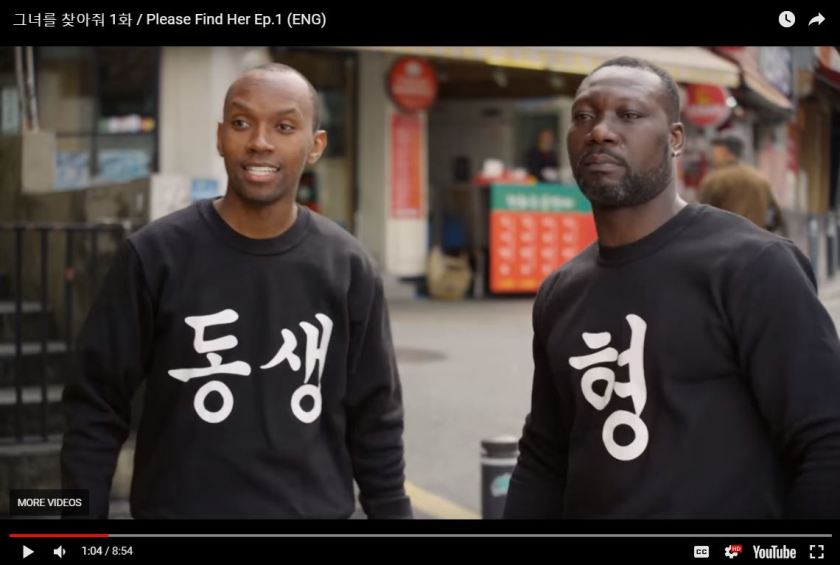
Looking to Learn Korean for Free? Well, Be Prepared for Some Racism I was going through Sejong Institute’s YouTube playlist to find useful material for my Korean tutoring classes. Then I found this. Let me take you down Racist Hill. Commentary at the bottom. The trope of Jeongnam, the Korean master of condescension, ends with him looking at the two black men’s shirts and pointing out “So, you’re the older brother? You look like it”. Here, the narrative is that the black men chose to play the Black Big Brother Trope. Although Jeongnam treats the three group of foreigners in the same condescending way, it is striking how explicitly racist the script is. Let’s look at the three groups of foreigners he interacts with. First, he meets the white American soldiers. With whom he has a brief exchange. This is done in informal/non-honorific language (반말). Second, he meets the Turkish man, “Abdul”. Although Abdul has a considerably more complex script compared to the other three groups, Jeongnam condescends him by (a) Telling him to fix his …
, Korean feminism takes advantage of the country’s telecommunications infrastructure and satiric humour to combat misogyny An emerging Feminist movement finds power in the collective power of the Internet Founded on August 6th, 2015, the independent website Megalian.com brands a new type of feminism – one that uses the country’s world-class ICT infrastructure to promote gender equality and to humorously bash misogyny on the Korean web. The name, currently filed for trademark registration by one of its users, is a neologism combining ‘MERS gallery’, the web forum where the movement was born, and ‘Egalia’, of Gerd Brantenberg‘s satiric novel ‘Egalia’s Daughters‘. Megalian.com operates strictly on an anonymous basis, with all members posting under the same nickname, except for notices regarding server maintenance by the site’s administrators, who nevertheless remain anonymous (As of December 2015, the few interviews conducted with its members or admins have not revealed any personal information). The collective movement began in June 2015, when women began to ‘mirror’ the misogynic comments made by male members on DCInside.com, a popular web forum. What was conceived as a minor page dedicated to sharing …
The pop-up screen from the National Police Agency (May 2014) Early March, I went to a launch party for an NGO called Arirang Institute. It’s mostly Americans and some Koreans working on cultural and reunification studies. What was fascinating was that the NGO is legally registered in the US, and that most members are not Korean. Oh, I should clarify, accessing information on North Korea here is illegal – if you try to access NK-based websites, you will see a screen with a police badge that says “You were stopped from accessing this site because either (1) You are breaching national security; or (2) You are accessing porn sites, or gambling sites” (Yes, it’s illegal to access porn!). One of the founders, who is studying for a PhD at the North Korean Studies University in Seoul, told me that the library does have all those books from North Korea (about Kim Il-sung and Kim Jong-il’s ideology, propaganda textbooks, and such) but no one is allowed to bring the books out or make personal copies – they are open for …
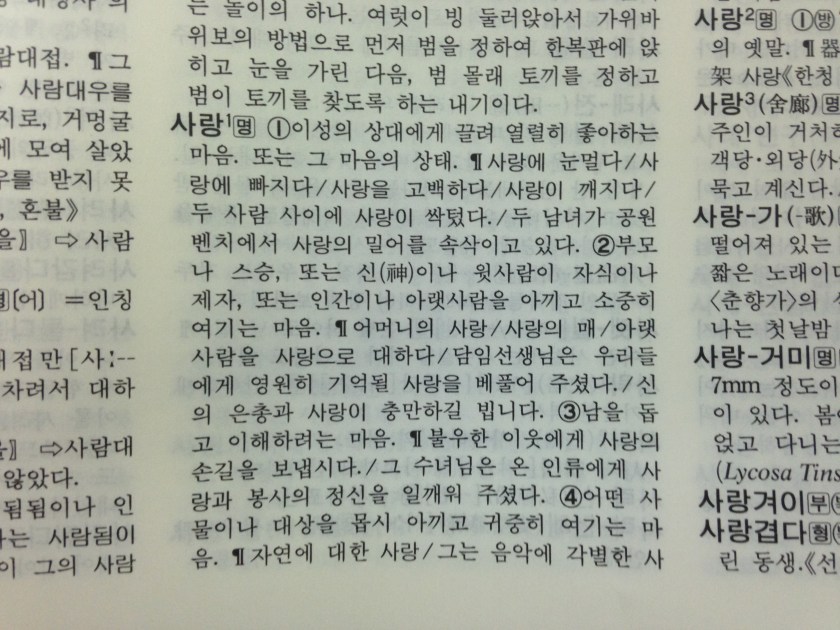
The 1999 Edition of Standard Korean Unabridged Dictionary, published by NIKL Photo by me In November 2012, the Standard Korean Unabridged Dictionary, published by the National Institute of Korean Language (NIKL), re-defined five words: 사랑 (love) 애정 (love, affection) 연애 (dating, courtship) 연인 (‘partner’, without referring to specific gender) 애인 (‘lover’, without referring to specific gender) All five words were changed to gender-neutral definitions. For instance, ‘love’ was re-defined from a feeling of attraction towards a member of the opposite sex to a feeling of attraction between two people. Likewise, lover was redefined as two people who are attracted to each other, as opposed to a female and male person who are attracted to each other. Many members of the LGBT community rejoiced at this small change, which would allow them to talk about themselves and their feelings free from heterosexuality-based words. However, barely a year later, in January 2014, Christian advocacy groups (technically, Protestant) lobbied into reverting these newly defined words to their original state. Such religious advocacy groups have been backing anti-LGBT movements in many different forms – When dramas with LGBT characters are televised, they place …
Image source: Ipsi Myungmoon Jungle-go Im my class of 70 students, only three graduated on time, that is, within the span of 4 years (or 8 semesters). One graduated a semester early by cramming his credits. About half of them graduated after 9 or 10 semesters. Even weighing in the fact that Korean men serve in the military for 2 years, Koreans, both male and female seem to take at least two semesters off prior to graduation. This year, entrants from year 2010 (for women) and from 2008 (for men) should be graduating – but only 10 students from 2010 did, all of them women. At the graduation, there were 10 students who started university between 2004 and 2007. So, where are all those students? What are they doing, burrowed in somewhere, playing Starcraft and League of Legends? You will find them at the library, at the reading rooms, at the hagwons – all cramming for some exam or another. What for? The GRE? Are they all going to grad school? No. They’re preparing to pass several …
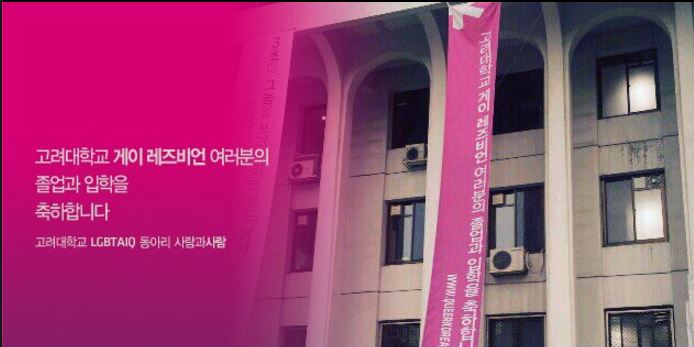
Korean LGBT folk have it pretty bad. In fact, they’re not too surprised to be targeted, teased, or discriminated. It’s just the way things have been, and continue to be. A gay friend told me that back in the early 2000s when he was in university, LGBT societies would get student Christian groups gather in front of their club room, sprinkle holy water on their door, and sing gospel songs “in order to save those poor souls being led astray by Satan”. This doesn’t happen anymore, maybe due to the fact that since then, LGBT societies would be given “anonymous” club rooms on campuses, disguising their namecards on the door or by merging many of their activities with the women’s rights groups. But university LGBT societies have constantly been unable to even welcome newly admitted students, like many other societies and clubs do – mostly because some crazy individuals acting in the name of the Christian religion keep vandalising their posters and placards. Although this is not the first time such an event has occurred, this …
 REAL KOREANS